
Forbidden Hymns | John Francis O’Mara

Wesleyan Vile-tality

The following is description of the album Forbidden Hymns by John Francis O’Mara. It’s a featured Speakeasy selection, and you can preorder it here.

In his first full-length album in a decade, Irish-American singer-songwriter, John Francis O’Mara offers Forbidden Hymns, a collection of thirteen songs encompassing Alt-Country, Americana, Folk, and Rock, exploring social justice, theology, hope, and heartbreak due October 10, 2025. Produced by Ken Coomer (GRAMMY winning producer, and drummer for Wilco, Uncle Tupelo, Steve Earle) and delivering with O’Mara in the studio for the Forbidden Hymns band are guitarist Kenny Vaughan (Marty Stuart, Lucinda Williams), multi-instrumentalist Chris Scruggs, John Lancaster on keys, the late great bassist Dave Roe (Johnny Cash, John Mellencamp, Dwight Yoakam) and backing vocalist, Vinchelle Woods. John Carter Cash (son of June and Johnny) joins O’Mara with the co-written “No One Gets Out of Here Alive,” –  a deeply human and empathetic reminder to “love pure and strong while there’s time.” In addition to his career as a singer-songwriter, O’Mara is an ordained Epsicopalian priest and Liberation Theology scholar, (Princeton and General Seminaries) currently working toward his Doctorate in Theology with a Social Justice focus, from Howard University School of Divinity.

“But, why ‘Forbidden’? Look around! The social and political landscape has taken a very dark and ugly turn,” says O’Mara of his album. “Stateside, the innocent and most vulnerable are being kidnapped and denied basic civil and human rights, while literal genocide and starving children’s screams are live-streamed in real time. Elites and the billionaire class rule from their ill-gotten thrones. Truth, beauty, and conscience are being legislated into silence, banned, and literally ‘forbidden’. The soul of America, and the very soul of humanity, is at stake. Many among us are being made to fear raising our voices.”

“Many among us are not afraid! I’m here to tell you, not on my watch,” the songwriter continues. “This is the precise moment many of us have been preparing for, and I will not be silenced. We who believe that a world full of empathy, justice, dignity and love is possible, will not be silenced! This record will not be silenced! Time to turn up the volume! Time to sing Forbidden Hymns.”

Forbidden Hymns opens with dynamic, “Walking In Babylon,” where O’Mara’s dulcet and soul-stirring, tremolo-tinged vocals and Kenny Vaughan’s reverberating guitar hook, are on full display.  The track opens with an a cappella fragment of Bob Marley’s, “Rastaman Chant,” – drawn from The Book of Revelation. O’Mara uses the ‘Babylon’ metaphor as referring to an occupying imperial force, under which ‘we the people’ suffer in exile. “In the shadow where the empire spreads, me and my brothers are breakin’ bread’. In the framework of the song, that empire is marked by brutality, poverty, and racial violence, particularly against black and brown bodies. The songwriter outcries, “if you can’t breathe, I can’t breathe…another brother layin’ in a chalk outline.” The song’s questioning lament is punctuated with a plea: “Somebody tell me that hope’s not gone? Everybody’s sayin’ they’ve had enough! Let the people sing, ‘what about love?!’”

The guitar groove of “Lately Mary” invokes early Elvis Costello, and this very sticky hook, straight ahead folk, pop-rock song winks at Springsteen. True to the motifs of the album, O’Mara bellows out core human questions, yet relevant for our times. “How we  gonna fill these mouths to feed? Gonna take more than a rosary bead,” he sings. O’Mara critiques the nauseating trend of many religious people in the face of tragedy, poverty, and despair, which is to offer ‘thoughts and prayers,’ rather than substantial, empathetic help. In this song, we see “Mother Mary” as she was, in her plain humanity,  a homeless, refugee, single mother facing her reality where “it seems again there’s no room at the inn.” Note that the cover art centers an historically accurate, brown-skinned, Palestinian, Mary. Caution: song causes contagious call and response crowd participation.

The delicate and acoustic, “Jesus Walked on Water,” features O’Mara’s intricate finger-picking, and pedal steel, driving this newborn classic. A title that might suggest another Gospel song from O’Mara, but this ballad is a curve ball. The songwriter asks a close loved one, “do you still believe in me? All this time it’s taken me? All this time been breakin’ me?” The song is a tender, direct and open-chested surrender, and an admission that he is no miracle-worker, and no prophet, just a man with nothing to offer other than, “for you, I would die.” O’Mara whispers a universally human question, “can you see me?”

“Often, things fall apart,” says the songwriter, speaking from experience. “Dreams and hopes burn down. We are left with nothing but wreckage and ash.” “Ashes, Ashes,” is a subtle rocker, opening with a blues inspired guitar lick.  Originally a piano ballad, John Francis pulled this treasure of an alt-country/Americana, guitar driven rocker, out of the smoldering ashes with the help of his longtime collaborator, melodic guitar-slinger Kenny Vaughan (Lucinda Williams, Marty Stuart). The first single released from Forbidden Hymns, “Ashes, Ashes” is reminiscent of early Wilco, in no small part due to the drumming and production of Ken Corner (Wilco, Uncle Tupelo). Bassist for Johnny Cash and Dwight Yoakom, the late great Dave Roe (for whom the record is dedicated) rounds out the low end of this reflective rallying cry about the aching beauty found in ashes, and the dazzling light behind the curtain of a world of shadows.

A soft, waltzy, guitar ballad, “Maria, I Would Dance With You But My Hands Are On Fire,” finds John Francis examining a biblical theme from an unexpected angle.  Rolling Stone Magazine reviewed Dylan’s John Wesley Harding saying it was the “first Biblical Rock ’n’ Roll record.” Dylan might have been the first, but O’Mara’s is the newest. In fact, the chorus, which is also the title, is a direct quote from Bob Dylan. In the immediate aftermath of Dylan’s notorious Newport Folk Festival ‘going electric’, Maria Muldaur reached out to Dylan, and asked him to dance. Declining her invitation, Dylan gave her a very Dylanesque reply, “Maria, I would dance with you but my hands are on fire.” O’Mara borrowed this line of dialogue, reframed it, and breathed it into the refrain for this poetic piece. In the epic love ballad, O’Mara conjures pillars of fire in the wilderness, stages like cages, cosmic loneliness, and “canyons quaking like young lovers waking in the shelter of each other’s bodies.” Like Leonard Cohen before him, O’Mara consecrates religious and erotic thematic images, and lets them bleed into one narrative. The sacred and the sensual coexist when he serenades, “with God as my witness / the only prayer on my lips is / the poem of her sweet name.”

With its groovy guitar work punctuated by a tambourine playing double time, the earcandy folk-rock, poppy hooks and crooning of “Miracle,” invokes one of O’Mara’s heroes, the original Irish soul man, Van Morrison. Already in heavy rotation when leaked as a single in Switzerland, the songwriter sings, “she’s an angel in flight as she glides across the kitchen floor, into my arms…my, my, my!” There is supernatural magic in the romantic swooning of new love, “Miracle,” sings the praises of passionate bonds. O’Mara woos, “Woman, you’re the only woman in the world I’m wantin’.”

In a remote log cabin in the deep woods of central Tennessee, John Carter Cash (son of Johnny and June) and John Francis O’Mara were minding their own business one brisk morning, when a song came knocking. The two good friends stopped what they were doing, and let the new song in. The theme and feel of it brought John Carter back to some of his final conversations with his father. In that moment, JFO and JCC channeled a song that would soon tug on the heartstrings and water the eyes of audiences far and wide for many years to come. “No One Gets Out Of Here Alive,” is a hauntingly stark and vulnerable call to imbue each moment with the courage to love boldly, because life is fleeting. A deeply human and empathetic reminder to “love pure and strong while there’s time / keep the ends out for the ties that bind / let love be your only song, til the day that you die…,” lest we forget that our days are numbered. John Francis and John Carter performed ‘No Gets Out…’ for a live PBS taping, for 20,000+ fans in the Arkansas State arena, on the inaugural ‘Johnny Cash Music Festival’, also featuring George Jones, Kris Kristoffeson, and Rosanne Cash. The official DVD of the event was released globally, and featured this co-written masterpiece.

John Lancaster’s churchy Hammond organ and O’Mara’s solitary vocal open, “Mighty Power.” Written to be a gritty, spiritual marching order, to get to shoutin’ in both sanctuaries and saloons, and then spill out into the streets. “It is a declaration of spiritual empowerment. This is not a religious song, yet it rings out like a massive bell,” says the songwriter. Vinchelle Wood’s backing vocal delivery sweeps us right up into the rapture of a Black church revival. “There’s a mighty power inside of me, stronger than the wind and the waves / stronger than the sting of the grave / stronger than the poison I used to put in my veins…” O’Mara grabs us by the shoulders, shakes us, and invites us to encounter what some folks call a “higher power”, and then testify that it is ‘stronger than the Pharaoh and his armies / stronger than the twisted chains of slavery / stronger than the sorrow a-hangin’ on your city..”. Throughout, Chris Scruggs’ lap-steel talks in a heavenly tongue. Like a young Robert Plant, O’Mara shrieks, “Do you feel the power!!” asking the listener: “well, do you?”

O’Mara may be known for being “ripe with the kind of honest questions we used to rely on guys like Dylan and John Prine to raise” (Philadelphia Inquirer), but goddamn he can write a heartbreak song of love gone wrong. “Secrets Are Safe” is one of them, although the irony isn’t lost on us, because O’Mara is literally telling secrets. “Secrets Are Safe” hits like one of those songs that’s always been around, opening with the lines, “I guess I lost you somewhere between the moon and the falling snow / Or did I lose you out there, where my wheels were full of road?” O’Mara finds hidden treasure in the darkness of loss and pain, drags it out, and dusts it off to share it with the listener.

Forlorn and inconsolably sad songs are one of O’Mara’s signatures, though the  phenomenon of “schadenfreude” comes to mind when listening to the lyrics of, “Maybe.” The listener can’t help but to glean resonant satisfaction from closure after all that pain. “Shadows stretch across our bed / across the words that we had said / how long have you known that you don’t know?” O’Mara is true to form as an Irish songwriter, and as G.K. Chesterton said of the Irish, “…all their wars are merry, and all their songs are sad.” This is a high and lonesome breakup song.

Touching the hem of U2’s garment, O’Mara’s band here is pulsing and driving, dynamic in tension and release. The tag at the end is gutwrenching, “My mouth still remembers the shape of your name.” Joining “Secrets Are Safe” and “Maybe,” “Wild Bleeding Heart” is third in the line-up of the broken-hearted trilogy on Forbidden Hymns. Once again, O’Mara spins together mythological images and literary figures to populate his landscape of cosmic loneliness.

Punching in at track 12, O’Mara delivers a riveting folk-rock pop song, in the vein of U2 or early Coldplay with the penultimate, “Heart Be Still” – an unabashed, tell it like it is, love song. The songwriter asks, “Love, could it be, that for love, the whole world bends the knee? / So come here to me! Come here! Come here! Come here! Come here to me!” Anyone who has longed to be near someone – and that’s everyone – knows this desire. “Gotta let your heart be still…next to mine.”

Closing the LP is the soaring, “Let it Be So,” which shines when the guitar solo nods at George Harrison, and the backbeat hits like Ringo. The song is the proclamation that another world is possible; a better world. If we are waiting for an anthem of change with a chorus to be echoed by everyone who still believes in justice, peace, dignity, and equality for all, our wait is over. John Francis O’Mara delivers that anthem, with the perfect ending to an exquisitely realized album:  “Somebody say ‘Amen!”

About the Artist
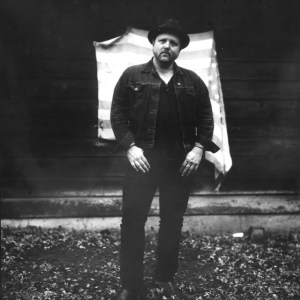
John Francis O’MaraJohn Francis O’Mara is an Episcopalian priest, theological scholar, activist, and acclaimed songwriter whose work bridges the sacred and the profane. With advanced degrees from Princeton Theological Seminary (M.Div) and General Theological Seminary (STM), and now pursuing a doctorate in Theology and Social Justice at Howard University, O’Mara roots his ministry in Liberation Theology and a tapestry of faith traditions including Celtic Christianity, Black Liberation Churches, and Native American spirituality. Hailed by Sojourners as “haunting as Springsteen,” dubbed by Wild Goose Festival as “one of the most prophetic voices of his generation,” and praised by Shane Claiborne as a “poet and instigator of movements,” O’Mara has performed everywhere from cathedrals to prisons, from UN gatherings to city streets, and alongside artists such as Sinead O’Connor, Mavis Staples, and Kris Kristofferson. Whether leading marches, teaching youth, or offering workshops and concerts worldwide, O’Mara shares stories and songs with theological depth, hard-earned experience, and transformative hope.

John Francis O’Mara’s Website

Forbidden Hymns Website


The Dance of Desire: Navigating Intimacy, Power, and Transformation with Rob Kancler & Rachel Rickards

What if the intimacy you’re craving isn’t about better techniques, but about showing up more fully in your body?

What might become possible if you could transform the way you relate to yourself and others beyond cultural conditioning?

In this wide-ranging conversation, I sit down with embodiment coach Rob Kancler and intimacy facilitator Rachel Rickards to explore the profound intersection of sexuality, embodiment, and authentic connection.

Together we navigate the rich terrain of what it means to be fully present in our bodies and relationships. Rob shares his journey beyond technique-driven approaches to sexuality toward the innate intelligence that emerges through presence and wonder. Rachel illuminates her concept of “Full-Spectrum Intimacy” that embraces physical connection while encompassing emotional, spiritual, and relational dimensions.

Our conversation delves into challenging territory, from the impact of pornography on embodied sexuality to the revolutionary practice of Belly2Belly—a deceptively simple breathing meditation that creates profound connection. We discuss how our cultural conditioning shapes our capacity for intimacy, the unique challenges faced by men and women in opening to vulnerability, and how transformative practices can help us reclaim our authentic sexual expression. We tackle the broader implications of cultural and systemic dynamics on intimacy and relationships, emphasizing the need for new, integrated approaches that honor both sexual desire and spiritual depth.

Both Rob and Rachel offer wisdom on how we might release our habitual patterns to create more fulfilling relationships, not by acquiring more techniques but by shedding the very limitations that prevent us from experiencing the depth of connection we truly desire.

Note: As you might imagine given the subject matter, this discussion is “PG-13.” Choose your listening / viewing environment accordingly.

Tune in here!

Upcoming Events:

The Intimacy Retreat — Want to experience the somatic and relational dynamics we talk about here, for yourself? Join Rob and Rachel for a week-long immersion at Heartwood Retreat Center just north of Atlanta, GA from March 10-16, 2024. Open to partnered folks and singles alike, this retreat offers a powerful container to explore embodiment and expand your capacity for intimacy. Find out more and register here.

Asheville Gathering — Stay tuned for our upcoming evening event in Asheville, NC on March 17, 2024 (St. Patrick’s Day!) exploring love, sex, and intimacy. Email mike [at] mikemorrell [dot] org to be notified when registration opens.

About My Guests:

From her early days as a spirited hostess in a bustling Mexican restaurant to becoming a celebrated facilitator and mentor, Rachel Rickards‘ life story is a testament to the power of transformation and authenticity. Born with a natural ability to connect with others, Rachel’s initial career in the hospitality industry was just the beginning of a lifelong pursuit int he art of bringing people together in meaningful ways.

Rachel is an international leader in the fields of personal transformation, intimacy, and group facilitation who began her career in event management before pursuing studies in human sexuality and therapy. After a transformative period of personal growth in Bali, she co-founded Embodied Intimacy, traveling globally for nearly a decade to foster communities centered on openness and deep connection, eventually co-pioneering practices like Belly2Belly. Today, Rachel mentors soul-led entrepreneurs and facilitators through her innovative approach called The Field, which integrates embodiment, resonance, and relational attunement to create transformative group experiences. Discover Rachel’s full suite of offerings at RachelRickards.com.

Rob Kancler combines somatic wisdom, practical application, and spiritual insight to help men access their authentic sexual power. After years of seeking answers through techniques – tantra, kink, energy work, and many different spiritual and somatic practices – he discovered something deeper: the body’s innate sexual intelligence, how to live from this essence (and how to help unlock it in others).

Rob blends precision with warmth and humor, creating space for deep exploration that feels natural and grounded. His background spans somatic therapies, consciousness work, and decades studying the intersection of sexuality, spirituality, and personal growth. His main offering is called Bedroom Genius and the invite-only sexual mastery program he runs in called Men Of Substance.

What we can learn from Christianity, Paganism, and…Psychedelics? Roger Wolsey on ‘Discovering Fire’!

Welcome, dear friends. In this dialogue we are blessed with the presence of Roger Wolsey — a minister, spiritual director, author and speaker whose journey mirrors mine in many profound ways. As children of the church, we’ve each treasured the gifts Christ brings to our lineage while venturing beyond conventional religious boundaries, exploring the rich tapestry of global spirituality, American pragmatism, counterculture, and the human potential movement. We’ve each found unique ways to synthesize these experiences, creating something deeply resonant and transformative for ourselves and many others.

In Roger’s book Discovering Fire, he doesn’t advocate for thoughtless religious syncretism, but he does recognize that our lived experiences often transcend the neat boxes of religious or spiritual categories. He draws inspiration from Methodist pioneer John Wesley and his holistic pastoral care, which led Wesley into diverse areas of advocacy—from economic aid to herbalism to early forms of electroshock therapy.

Our shared background allows us to delve deeply into conversations, often finding a rhythm that is both spontaneous and enlightening. In our interview, we cover ground like:

  • Why is religion in crisis today?
  • What are the benefits and drawbacks of ‘spirituality’ as a standalone pursuit? (We respond to this one from our paradoxical experiences living in the ‘spiritual’ hubs of Boulder and Asheville.)
  • Why being both spiritual and religious is arguably the most countercultural way-of-being today.
  • The interplay between revelation and pragmatism in religious belonging and spiritual practice
  • Adaptive spiritual technologies as God’s way of helping us reconnect and thrive in a world of fresh challenges
  • What are three emerging practices from the wider culture we wish Christians would embrace?
  • What are three practices from the Christian tradition that we believe our spiritual-but-not-religious friends should explore?
  • How can Methodist pioneer John Wesley’s approach guide us in following Jesus and embracing the full spectrum of ‘fiery grace’ available to us today?

Our discussion touches on practices including:

  • Centering Prayer
  • Lectio Divina
  • Choir singing
  • Acts of service
  • Authentic Relating and its intersection with spiritual growth
  • Shadow Work
  • and yes, plant medicine.

Roger’s chapter on plant medicine is one of the best introductions to the topic I’ve encountered. He highlights the surprising continuities between Scripture, Christian tradition (thank you Hildegard of Bingen!), and indigenous wisdom. He presents a balanced view, considering both the promises and the perils of working with our plant siblings. He also addresses the complexities of cultural adaptation, potential pitfalls of cultural appropriation, and the consumerism of ‘Big Shamanism.’ I highly recommend you pick up Discovering Fire for this chapter alone.

Thank you for joining us. I invite you to dive into this rich conversation with open heart and mind:

To connect with Roger further, including for spiritual direction and coaching, see this helpful section on his website!

Read an excerpt of Discovering Fire here!

About the Author

Roger WolseyRoger Wayne Wolsey is a free spirit who thinks and feels a lot about God and Jesus. He’s a progressive Christian who identifies with people who consider themselves “spiritual, but not religious.” A trumpeter, Roger grew up during the “Minneapolis Sound” era of the 1980s and ‘90s. These experiences contribute to a musical approach to his theology. Roger studied philosophy and political science, graduated magna cum laude and Phi Beta Kappa, from Macalester College in St. Paul, MN, and earned a Master of Divinity degree at the Iliff School of Theology in Denver, CO. Roger is an ordained pastor in the United Methodist Church. He has taught classes as an adjunct instructor at Graceland University in Lamoni, IA, and at the Iliff School of Theology in Denver, CO. He has served as a pastor for churches in Minnesota, Iowa and Colorado. Roger was president of the board of directors of the Boulder International Fringe Festival. He currently serves on the Board of Directors of Progressive Christianity.Org. Roger blogs for Patheos (as The Holy Kiss), Sojourners, Elephant Journal, and Huffington Post. Roger is a speaker for numerous festivals and conferences. Roger is available for speaking, retreat facilitation, and spiritual direction — check out his offerings here.

Confessions of an Omnidirectional Lover: Deconstructing My Sexuality


Am I queer?
It’s a question I’ve wondered about for awhile, though maybe not in the way you might think.

The first inkling I had of my particular flavor of potential queerness (Schrödinger’s queerness?) came when I was only five years old.

I was in Sunday School, gathered with two girls who were best friends with each other — Lynne and Amber. This particular Sunday morning, I was sitting between them. Lynne was holding one of my hands, resting in her lap. And Amber was holding my other hand, resting in her lap.

I felt like I was in heaven. It felt sweet, wholesome, and right. I’m pretty sure we stayed this way throughout the entire felt-board Bible lesson.

Our Sunday School was team-taught by a woman and a man; I’ll never forget what happened after the lesson concluded.

The man put his hands on his knees, leaned in my face, smiled, and said:

“You know, you’re going to have to choose, eventually.”

And I remember thinking at the time: “Why?”

Leaving aside for a moment that this is a hell of a thing for an adult to say to a five-year-old, even then, the idea that I’d have to choose between the affection and companionship of two girls who clearly cared about each other and were enjoying me felt ludicrous.

Of course, this is the messaging I’d continue receiving growing up in Georgia, in the U.S. South, the ‘buckle of the Bible Belt.’ Evangelical Christians in the genre of faith I was raised in somehow ignored the messy, manifold witness of Scripture itself (what with its polygamist patriarchs and serial marriages culminating in twin New Covenant champions, Jesus and Paul, who ostensibly celebrated celibacy above all) in favor of a flattened 1950s-styled nuclear family with a paired dyad at the center, ‘forsaking all others’ becoming a social isolation chamber where other friends, loves, and community had no place.

I’d hear whispers of other possibilities over the years: realizing that alternative religious communities from Mormons to Shakers to the Oneida Community tried experiments in old-school polygamy, sublimated celibacy, or free-love as the elixir to immortality, respectively. In college when my roommate and I launched the proto emerging church Web directory ‘sites unseen,’ we fielded link submissions for ‘the best Jesus-infused websites you never knew about,’ including from a group called ‘Liberated Christians’ or some such thing, which included full-length PDF Christian polygamist romance novels! (We did not include it in our links list.) And my brothers in Christ on campus would sometimes acknowledge in hushed tones, like Nicodemus slipping in under the cloak of night, that they wished they could enjoy multiple loving, romantic relationships during our potentially-freest years of communal living and learning. But alas, it was probably ‘wrong.’ And besides, they didn’t want their girlfriends having these same freedoms.

Years passed. I courted, then married, my highschool sweetheart, who was and is amazing. (We recently divorced after a quarter-century, which I wrote about here.) We started married life amid a house church community where we practiced open, participatory gathering, women were equal to men, and — like the early church recorded in Acts — we sought to share all things in common. Well, *almost* all things!

Rejecting nuclear family norms by intentionally moving into neighborhoods together, throwing our arms around each other while singing, sharing so many meals and caring for each other in sickness and health, had an effect on me. Living a more genuinely tribal life outside of isolated nuclear family, white-picket-fence norms began to water seeds deep in my relational soil.

But tension and conflict was growing within me. I’d feel guilty sometimes for enjoying friendships that felt ‘too’ close — no physical lines were crossed, but my heart felt more open than the relationship structures and expectations of those around me seemed to allow for. I flourished in containers of loyalty, covenant, and commitment, but increasingly *sucked* at exclusivity. And I didn’t want to become good at walling off my heart, my body, or my life from others.

I remember thinking at the time: “Why?”

Years kept rolling on. Our beloved community dissolved, due to conflicting community visions within, as well as in our larger movement. I’d continue connecting with the wider emerging church ‘conversation.’ One day, a dear friend and colleague in that world told me I’d find some soul-solace in a book that had just come out: Sex at Dawn: The Prehistoric Origins of Modern Sexuality by Christopher Ryan and Cacilda Jethá. This pair of anthropological journalists summarized a compelling case that humanity, for most of our history as ‘prehistoric’ immediate-return foragers spanning hundreds of thousands of years, lived in a simpler relationship with the land and creatures around them, not yet stratifying into competing groups based on concentrations of wealth, violence, or gender privilege. Tribal band societies were by-and-large peace-loving, abundantly-grazing, pro-social beings who shared improvised shelter, freshly-gathered food… and love, sex, and bonding.

Sparks of recognition ignited in my heart and understanding. This more primordial, pro-social way of relating has always felt innate to my system — and quite resonant with the itinerant, lilies-of-the-field-venerating, convivial meal-sharing, touching-and-anointing-and-healing-each-other, reclining-and-laying-heads-on-each-other’s-chests Way of Jesus that I grew up learning about in Sunday School, but that folks in ‘big church’ seemed to have a difficult time integrating and living out.

And while it certainly isn’t for everyone in our contemporary world, I began to understand that enjoying multiple loving, romantic, intentional relationships, with the informed and joyful consent of all people involved, is just how I’m wired.

Alternative spiritual teacher and community organizer Morning Glory Ravenheart Zell (1948-2014) coined the term “polyamory” in her May 1990 Green Egg Magazine article, ‘A Bouquet of Lovers.’ It’s a Latin-Greek hybrid term meaning “loving many.”

Of course, we all love many — if we’re neighbors, siblings, parents, children, friends.

It’s part of being alive, even if our civilizational structures seemingly conspire to keep us increasingly tired and disconnected.

And for some of us…maybe your co-workers, neighbors, relatives, maybe even you… also have (or desire) a plurality of intimate partners or companions. Some of us are asexual; some of us are highly sexual. Polyamorous people come from all walks of life, all genders, races, sexual orientations…and faiths.

Yes, even friends of God, aspiring Jesus-followers. Even Christians.

Including me.

I yearn to share in intimate communion with those who naturally resonate with my being. I long to offer my gifts freely and without reservation within relationships that are inherently meaningful. I desire to perceive myself through the eyes of others, to be seen and understood by those who willingly engage in this sacred exchange with me. I seek the liberation of my body, where the giving and receiving flow effortlessly as one.

I crave to meet longing with equal longing, passion with fervor, and hunger with fulfillment. No longer do I wish to squander my energy responding to interest with apathy, passion with indifference, or desire with disdain. I aspire for my world to be opened wide, where my senses can come alive with every new sensation. I explore new heights and savor the depths of experience, cherishing both the novelty of discovery and the familiarity of enduring connections.

Above all, I seek to feel the boundless potentiality that life offers. I am committed to my own growth and to supporting others in their psychological, spiritual and kinesthetic evolution. Most profoundly, I am compelled to practice resurrection — to engage in the timeless dance of transformation, alongside kindred spirits who understand this journey.

For me, embracing omnidirectional loving (within safety, negotiation, and integrity) represents a significant pathway to awakening — a doorway to a more alert existence, embracing life in its entirety. It makes me a better person, better parent, and better follower of Jesus.

So back to my original question: Am I queer?

I’m honestly not sure how to answer this question, which is probably why I waited ‘till near the very end of Pride Month to share this unusual ‘coming out.’ I’ve loved bodies and souls of every gender on the spectrum, and I tend to gravitate toward women and femme folk, most of the time. While it feels a little boring in the gender-expansive spaces I gratefully get to spend increasing time in, I consider myself kinda ‘hetero-flexible’ at best!

And…I’m dedicated to queering relational structures, themselves. Mine first and foremost, and the sorts of spaces that we can catalyze in our communities. Because mutual aid and solidarity in our most intimate loverships contains positively revolutionary potential.

I felt particularly convicted to share my story after following the heartbreaking recent accounts of two amazingly gifted ministers, Rev. Kerlin Richter and Rev. Dr. Sara Lynn Shisler Goff, both of whom felt forced out of priesthood in the Episcopal Church because of institutional disapproval of their loving, polyamorous families. Not to mention charismatic,-background worship leader Katie Simbala and her triadic family, and the tireless work of UCC laywoman and journalist Jennifer C. Martin in showing the beauty, mundanity, and mutual-aid practicality of her homesteading family structure.

Each of these brave women have lived out their faith and their sexual-relational orientation at great cost. It’s so sad to me that even in allegedly ‘progressive’ and ‘queer-affirming’ Christian spaces, there continues to be so much fear and misunderstanding around those of us who love and relate differently — as though we’re going to steal your spouses and sow moral chaos in your congregations!

We’re not interested in that. We’re too busy co-creating the more beautiful world our hearts know is possible…and syncing up our overcrowded Google Calendars. ; )

Thank you for hearing me, and my story. For my beloveds of queer sexual orientations, please know that I’m happy to meet you on whatever ground feels right to you. If it’s as a fellow queer sibling, wonderful! If instead it’s as a close ‘cousin’ and aspiring ally, thank you. I’m grateful either way.

If you resonate with my journey in any way, I encourage you to meet me at Wisdom Camp: Depth and Desire in just under two weeks. I’ve assembled a collective of dear ones sharing from their own zones of genius about how to create beautiful, sexy, harmonious erotic and relationally-rich lives — whether you’re faithful or doubter, queer or straight, kinky or vanilla, trans or cis or nonbinary, asexual or hypersexual, monogamous or polyamorous or still questioning just what on earth you are. For perhaps once in your faith-community experience, it’s not BS — everyone is welcome: with your questions, your insights, your whole lives.Whether you can make it out to Harmony, North Carolina, in a couple weeks or not, let’s keep finding and supporting each other, okay? Times are tough right now in so many arenas, but I’m convinced that a Divine Kin-dom is rising like yeast in our midst.


More on Wisdom Camp: Depth and Desire…

Our hunger for love, intimacy, and a sense of belonging is a fundamental aspect of being alive, isn’t it? It transcends cultures and backgrounds.

Without authentic intimate connections, we so often experience feelings of loneliness, emptiness, and a lack of fulfillment, regardless of other achievements or pursuits.

Suppressing or ignoring these vital aspects of ourselves often leads to internal conflict, unfulfillment, and the inability to form genuine connections with others.

And religious baggage — from last year or a lifetime ago — is often at the core of our intimacy deprivation.

This is why we’re so inspired to offer you this year’s day-retreat, Wisdom Camp: Depth and Desire.

Discern your path to the conscious love, sexuality, and relationships you’ve always wanted.

Are you seeking a space where your spirituality and sexuality can come together in a hot and holy ‘yes’?

Where you can explore the depths of love, intimacy, and relationship styles without fear or judgment?

Look no further than this year’s Wisdom Camp – a transformative day-retreat for hungry hearts ready to embark on a journey of self-examination and communal growth.

At Wisdom Camp, we invite you to stop apologizing for your wonderings and longings, stepping instead into loving the questions themselves. Instead of shame and shut-down, dive deeply into inner inquiry, collaborative learning, and grounded play.

In a safe(r) and nurturing environment, we’ll delve into questions many are asking: about getting our touch (platonic and erotic) needs met, consent, mindful embodiment, kink, tantra, and alternative relationship expressions. We are on a quest for the inner and collective freedom to create relationships that honor our unique needs and everyone involved.

Throughout our time together, we’ll be guided by the ancient wisdom of venerable contemplative traditions, especially (believe it or not!) the teachings of Jesus – an advocate for scandalous grace and love without limit. Be challenged to hear Jesus’ message afresh, beyond stale assumptions and into the diversity of human experience.

Every body is welcome at Wisdom Camp: Whether faithful or doubter, queer or straight, kinky or vanilla, trans or cis or nonbinary, asexual or hypersexual, monogamous or polyamorous or still questioning, you’re invited to discover, deepen, and celebrate your God-given expressions in ways resonant with your deepest values, including Jesus’ call to love, justice, and abundant living.

Wild Goose Festival is a space where people of diverse backgrounds bravely ask many of life’s most pressing questions, playing and listening to a symphony of responses. Wisdom Camp: Depth and Desire offers a facilitated container inviting curiosity, courage, and collaboration into specific questions with a cohort of fellow learners.

Wisdom Camp: Depth and Desire invites us to reflect on and activate our own sacred sexuality, bringing together mind, body and spirit to live life more abundantly.

Participating in this experience, you’ll be able to:

* Deepen your emotional and physical intimacy with your partner(s).
* Explore and express your desires without inhibition.
* Cultivate more passionate and fulfilling connections.
* Communicate your needs openly and foster mutual understanding.
* Approach intimacy with confidence and presence.

Wisdom Camp: Depth and Desire will give you the tools to:

* Release limiting beliefs and embrace your authentic self.
* Foster trust, vulnerability, and emotional safety.
* Discover new depths of pleasure and connection.
* Develop skills for a more satisfying intimate life.
* Nurture greater self-acceptance and self-love.
* Seamlessly, joyously weave your spirituality and sexuality into a tapestry of Love

Our time together will free you to:

* Celebrate your desires without shame or judgment.
* Experience intimacy with an open heart and mind.
* Strengthen the bonds of love and companionship.
* Embody your most confident and radiant self.
* Embrace intimacy as the sacred path of growth you always knew it could be.

In one carefully-curated day, you’ll receive:

* Guidance to heal past traumas and limiting narratives.
* Tools to enhance communication and emotional attunement.
* A supportive space among fellow journeyers to explore intimacy without fear.
* Insights into cultivating deeper presence and mindfulness.
* A roadmap to nurture lasting passion and connection.

We hope to see you here! For full lineup of teachers, experiences, and to register, go here. You can also invite friends on Facebook here. You can save 20% off Wild Goose Festival registration with my discount code, OPTIMYSTIC, at checkout!

I Won’t Hide Around Sex Anymore: A Very Personal Note

Michael flashes his best 'merman' smile and pose.
Feeling free in my body — a little silly — and loving life. : )

Hi friends,

On this blog and in my ‘Opti-Mystic Meditations’ newsletter, it gives me joy to bring you the very best resources in spirituality. As a teacher and fellow seeker, I love sharing gems that actually meet us where we live in our daily lives, bringing us into greater communion with God, ourselves, each other, and our world. 

From my deep roots in Christianity to flowering branches in Sapiential (Wisdom) streams from across history and the planet, I’m no stranger to the power of imagination and hypothesis. At the same time, esoteric engagement has to lead me to real results to be enduring — if it isn’t practical, it isn’t spiritual, my house church mentors used to say. 

And as the brilliant, complicated North African bishop Augustine of Hippo (354–430) is summarized as saying, “All truth is God’s truth.” 

Has your search for truth brought you to strange places sometimes?

Places that former — more fearful, constricted, fundamentalist versions of yourself — would condemn as bad, wrong, or dangerous?

And did you move forward regardless? 

Where has seeking after truth (no matter the cost) brought you in life? 

Seeking truth in all her guises has cost me a lot, but the search (and the finding) is an investment I wouldn’t trade for anything. 

When Truth alchemizes in the fires of reality-testing, it transmutes into Wisdom. And Wisdom, personified as a feminine face of the Divine in ancient Scripture, is rightly valued: 

Receive my instruction, and not silver,
And knowledge rather than choice gold;
For wisdom is more precious than rubies;
nothing you desire can compare with her.

(Proverbs 8:10-11)

Wisdom is priceless. 

And there is indeed a cost. 

For instance, whenever I’ve shared about cultivating an authentic, life-affirming sexuality in these pages (for instance, featuring Tara Teng Anna DuPree, or Michael Hrostoski), my unsubscribes are nearly double what they are if I’m exploring ‘safer’ theological or spiritual territory. Not even when I talk about politics or public witness is the reactivity of some so high. 

And I’ll level with you: Even though I’ve shared a lot of my personal odyssey as a spiritual weirdo with you over the years, this reactivity has me wanting to hide my own journey from you, sometimes. 

For instance, even though we announced it on social media, I’ve not yet shared with you —dear blog readers — that my highschool sweetheart and I finalized our divorce several months ago. It was amicable, but as anyone who has been divorced (or through an otherwise-significant breakup) knows, this kind of undoing is unraveling on a core family and identity level, even under the best of circumstances. 

Now, I’ve never been one of those ‘bleed all over social media and the Internet’ types. With all respect to those who choose to narrate their day-by-day play-by-plays online and find value in this, I’m grateful for dear friends, healthy spiritual community, and good therapy that happens offline. With the exception of requesting prayer and blessing for sudden illness or other life urgencies, it matches my vocation and temperament to share what I’ve digested a bit, so it can potentially be food for you. 

Even so, I’ve been keeping some food back, rotting in the storehouse out of fear of what some of you might think of me. 

And I’m coming to see that this is wrong. Jesus, after all, is against hoarding our food while others are in need. 

And so moving forward, I’m committing to share with you more vulnerably of where my search for Truth and discovery of Wisdom has taken me. Where my journey into the heart of  Trinitarian fellowship — where I discover myself hidden with Christ in God, incarnationally alive as more fully human and divine — is authentically bringing me.

Like Methodist minister Roger Wolsey, whose recent groundbreaking teaching memoir has him ‘coming clean’ about how practices like Circling, Authentic Relating, ecstatic dancing and plant medicine have enhanced his and others lives alongside more stalwart Christian practices like Scripture study and Centering Prayer (seriously, read Discovering Fire if you haven’t already), if you choose to keep reading I owe it to you to offer my unvarnished experience — living my one, precious life in all its animal grit and angelic glory. 

Part of claiming what my friend and colleague Micky ScottBey Jones has popularized as ‘brave space’ means sharing even more — and more personally — about sexuality. Not as the sole focus of of this blog / Opti-Mystic Meditations (don’t worry, I won’t be abandoning the contemplative and nerdy reflections and interviews you’ve come to enjoy spanning history, ecology, sociology, scripture and other areas of praxis!), but as an important missing piece for those of us emerging out of the matrix of harmful beliefs, practices, denials and repressions so many of us have suffered through, known collectively as purity culture. 

This will be a deliberate, intentional unwinding alongside you over time, not a sudden, titillating info-dump all at once (sorry if that disappoints any of you, especially college roomie David James or personal pastor Tripp, who’ve been pestering me to write my tell-all memoir for years). But don’t worry — I am going to get into something substantial today. 

Those of you who know my passion for conscious men’s work and (especially cis, straight) men taking responsibility for our actions in light of the harassment and assault of women and genderqueer folx will hopefully see the lines of congruence to wanting to discern a sexual ethic and way of being in our refining understandings of what it means to live in sexual integrity. 

In today’s rapidly evolving world, the landscape of masculinity, eroticism, and healthy sexuality is undergoing a profound transformation. 

If you’re a man navigating this new terrain (and I’m going to speak from my experience here as a straight, cisgendered man primarily to those of you who are in the same boat as me, though everyone is welcome to listen in and glean whatever’s valuable here), you’ve likely felt the pressure to adapt and evolve — not just in your professional and personal life, but in your most intimate relationships as well.

Here’s what I’ve been learning: investing in my sexual development is no longer a taboo topic or something to be hidden anymore.

In fact, it’s becoming a rite of passage for men who take their lives, their partners, and their own growth seriously.

From top podcasts openly discussing sex and relationships to friends casually mentioning their latest intimacy workshop, our culture is embracing sexual growth like never before.

And with high-quality partners increasingly viewing emotional intelligence and sexual mastery as non-negotiable traits in those they wish to relate to, the writing is on the wall:

If we want to thrive in this new era of masculinity and cultivate the deeply satisfying, passionate, and sex lives we desire, we can no longer afford to leave our sexual development to chance.

But here’s what I’ve discovered…

I don’t have to navigate this journey alone (and neither do you).

Last summer — when I knew my marriage was ending, when I was grappling with what it meant to be partnered, and what it felt like to be alone — my dear friend and brother Michael Hrostoski wrote this Facebook post. It was so real, so vulnerable, that I knew I had to give the cohort he was offering a try. 

And so I did, joining the inaugural Men of Substance cohort. 

I’m so glad I did. The facilitators (Michael H and Rob Kancler) brought an integrative, embodied perspective on sexual discovery and mastery I hadn’t encountered in this way before, in spite of years of reading and immersions in the field. 

I got back in touch with my body, my emotions, and my relational history.

I was offered a potent, exciting, and even magical vision of what a fully-expressed sexual and relational life could look like. 

And I was given the practical tools + a loving, adventurous community of fellow seekers after truth to bring these disclosures and possibilities back home in my nervous system, body, and my life. 

This work has changed so much for me. 

I’m not going to go into all of it now, but if you’re interested to hear more I might devote another upcoming post to sharing some of its impacts (write back and let me know what you’d like to hear). 

But for now, I want to let you know that Men of Substance is back, for the first time in awhile. Expanded from the ‘beta test’ I first participated in last summer, Michael and Rob have been substantially refining this offering. It’ll be a nine-week a 9-week online intensive for any man who’s interested in letting go of sexual frustration, fear, shame, and setback — and really, any man who wants to make even a good sex life a great one.

One more thing I’ll say here: I’ve discovered that addressing the sexual-energetic dimension of my life actually reverberates into every dimension of my life: my parenting, my work-life, my sense of vocation and calling, my energy levels, physical strength, and overall sense of peace and wellbeing. Even (dare I say) in my relationship with God.

If you’d like to hear Men of Substance co-founder Michael Hrostoski share about his own journey out of religious fundamentalism into his best sexual and spiritual life, check out this video:

And if you’d like to simply see the full Men of Substance offering, just go here.

Thank you for hearing me, and this dimension of my truth. 

I’ll keep sharing some things that have been very valuable for me. Practices, insights, and community forms that are having overwhelming positive effects on my happiness, vitality and creativity.

If you feel like you need our digital journey to part ways here, I understand. 

But if you decide to stick around (and maybe even invite friends!), welcome. 

I won’t count your continued reading as uniformity and 100% agreement with my journeys, discoveries, and life choices. I don’t expect that of any of my friends…that would be boring. : )  

My only ask is that you keep an open heart and mind, if you’re so willing. And I promise to do the same.

In gratitude,

Michael

PS: Who is Men of Substance for?

When I’m facilitating, participating, or recommending groups or transformational work, it’s important to me to be clear on the focus and strengths of a given container, what “lane” they primarily stay in. Thus I think it’s important to note that Men of Substance is tailored to the experiences and aspirations of men in heterosexual relationships, centering discussions around enhancing the pleasure and connection within these dynamics. While the material, discussion prompts, and exercises offered primarily address interactions between men and women, Michael and Rob want to emphasize that all men (cis and transgender) are welcome to participate, regardless of sexual orientation. Recognizing the diversity of participants, Men of Substance encourages open-mindedness and a shared commitment to personal growth and connection. So if this sounds interesting to you, check it out!

PSS – What’s your journey of embracing your authentic sexual nature been like? I’d love to hear your story.